
Vehicle & Arrival
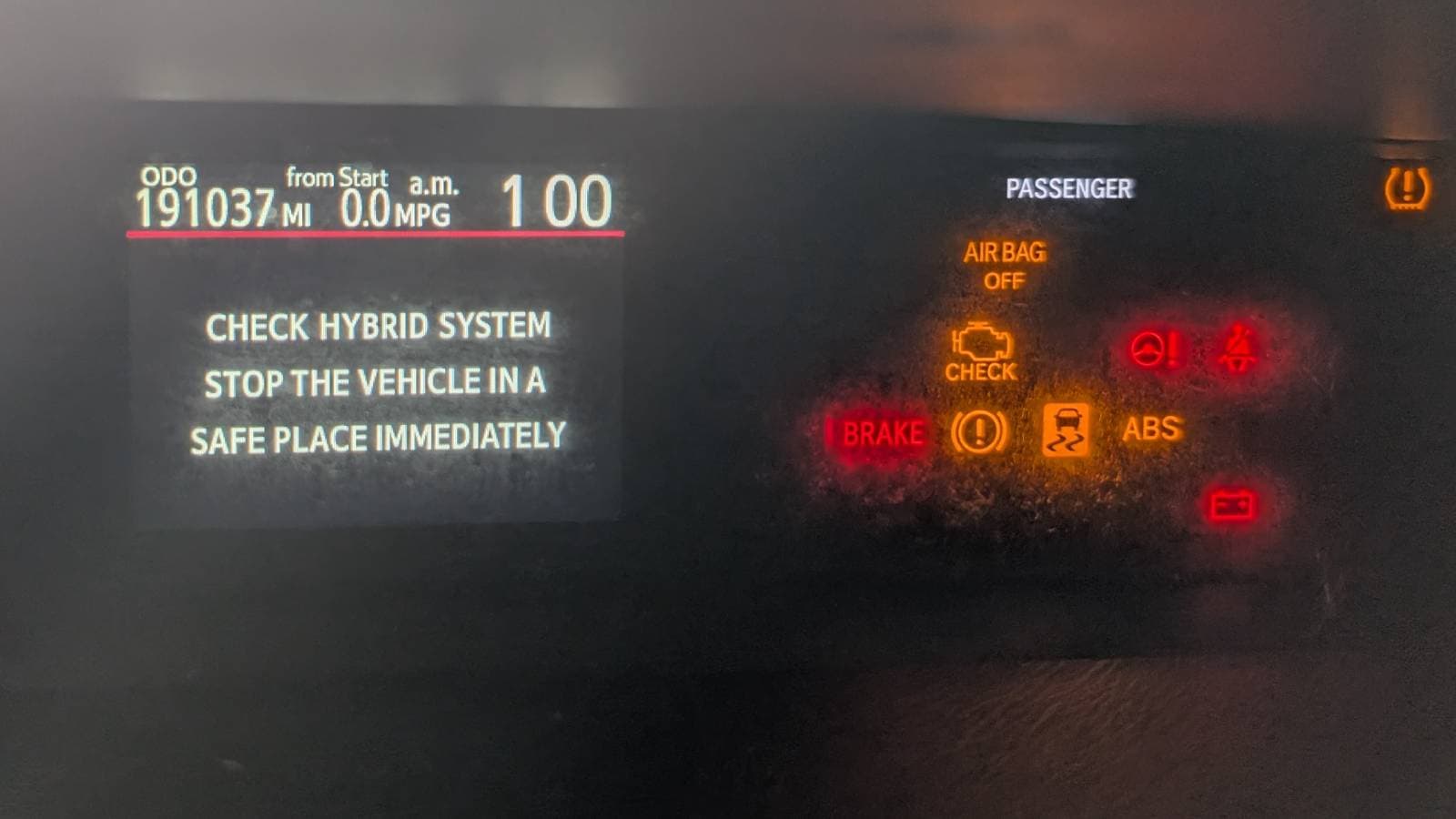
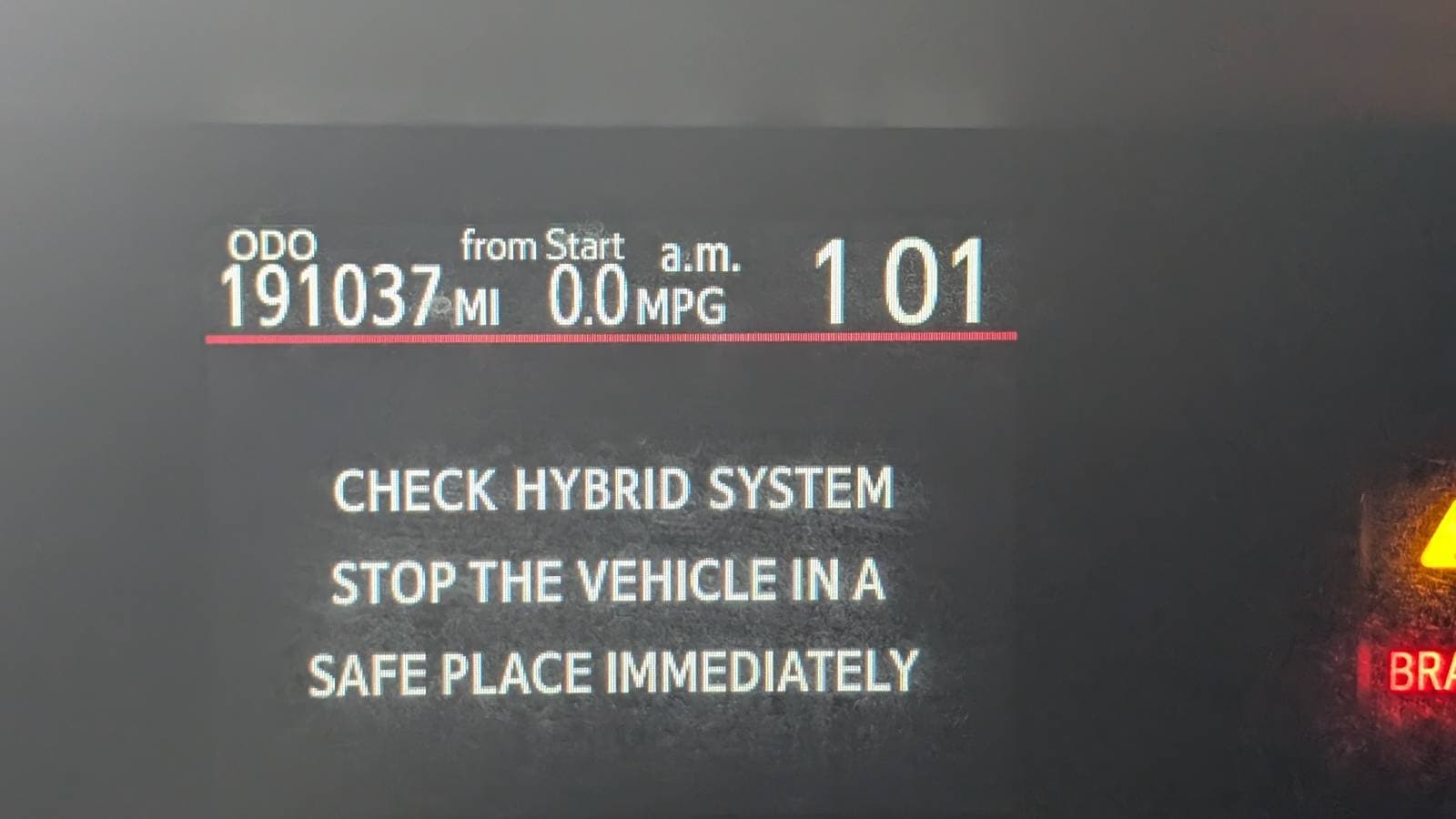
A 2012 Toyota Prius C with 191,037 miles came in unable to stay running. The car would enter READY state and then immediately exit it, displaying "CHECK HYBRID SYSTEM — STOP THE VEHICLE IN A SAFE PLACE IMMEDIATELY" on the dash before shifting itself to neutral.
First Observations
At intake, the car would key on but couldn't sustain READY state. Each attempt to start brought up the CHECK HYBRID warning within seconds, along with brake, ABS, traction control, and 12V battery indicators across the dashboard.
Diagnostic Process
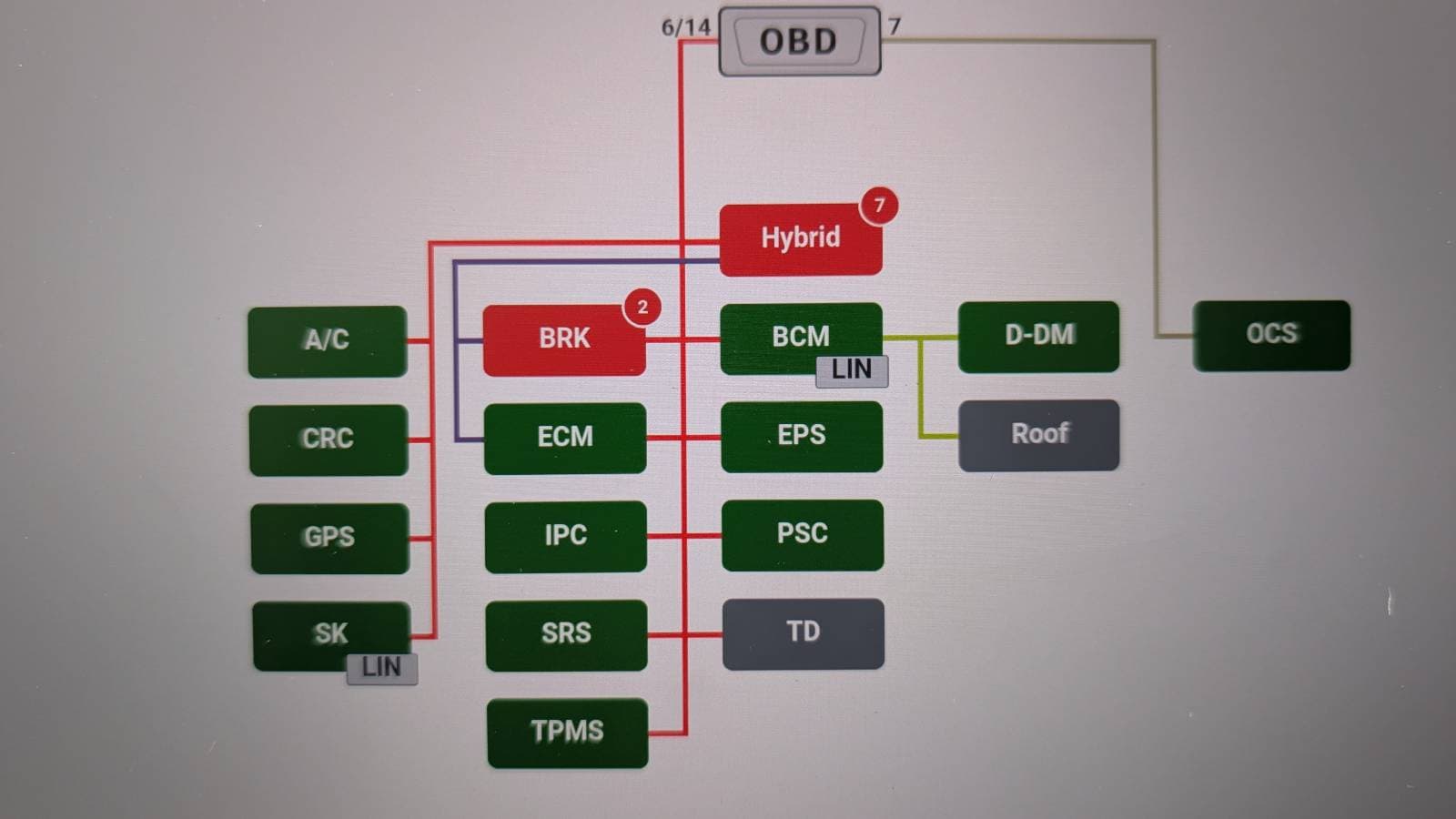
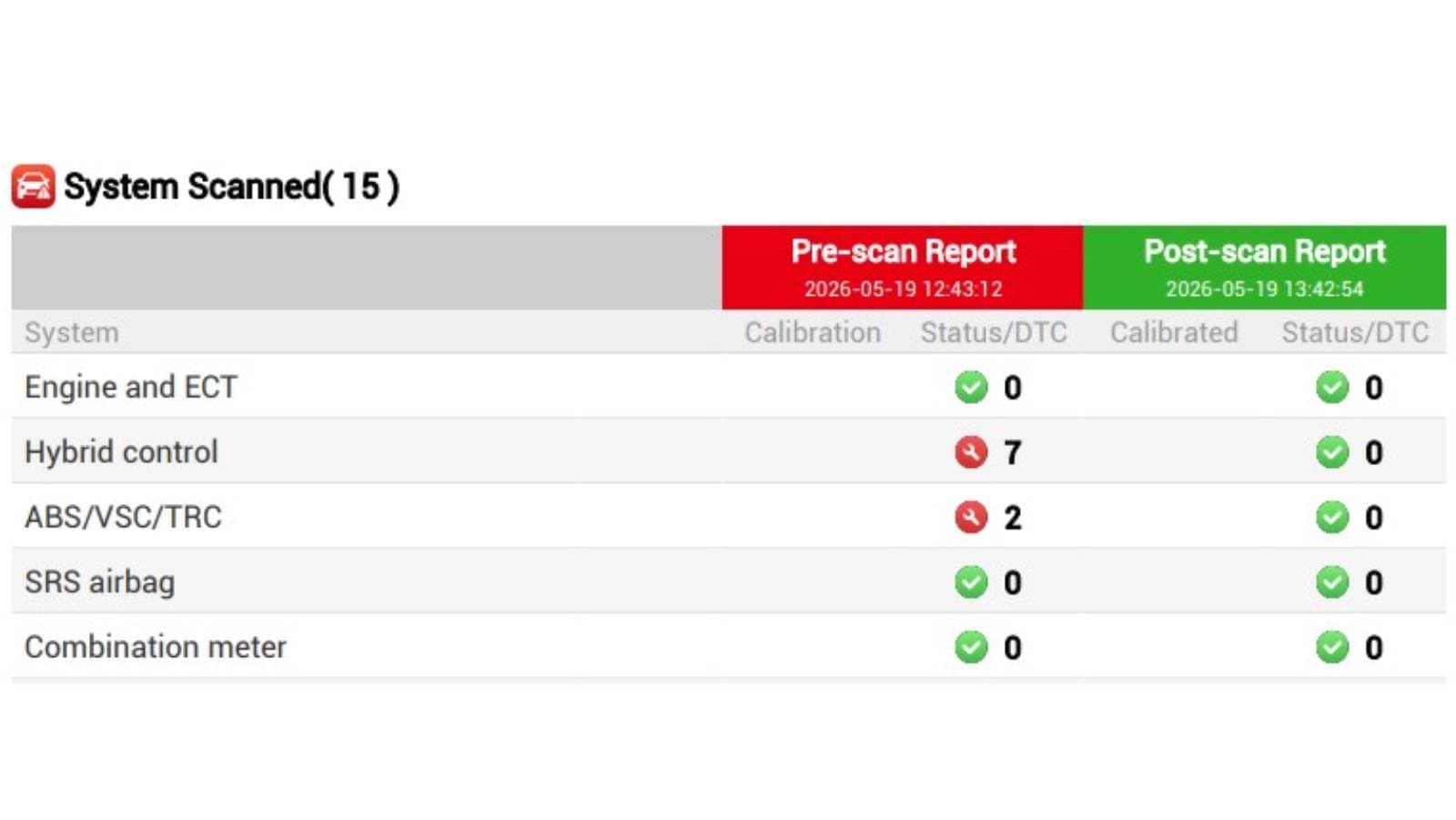
We scanned all systems and pulled nine fault codes across two modules.
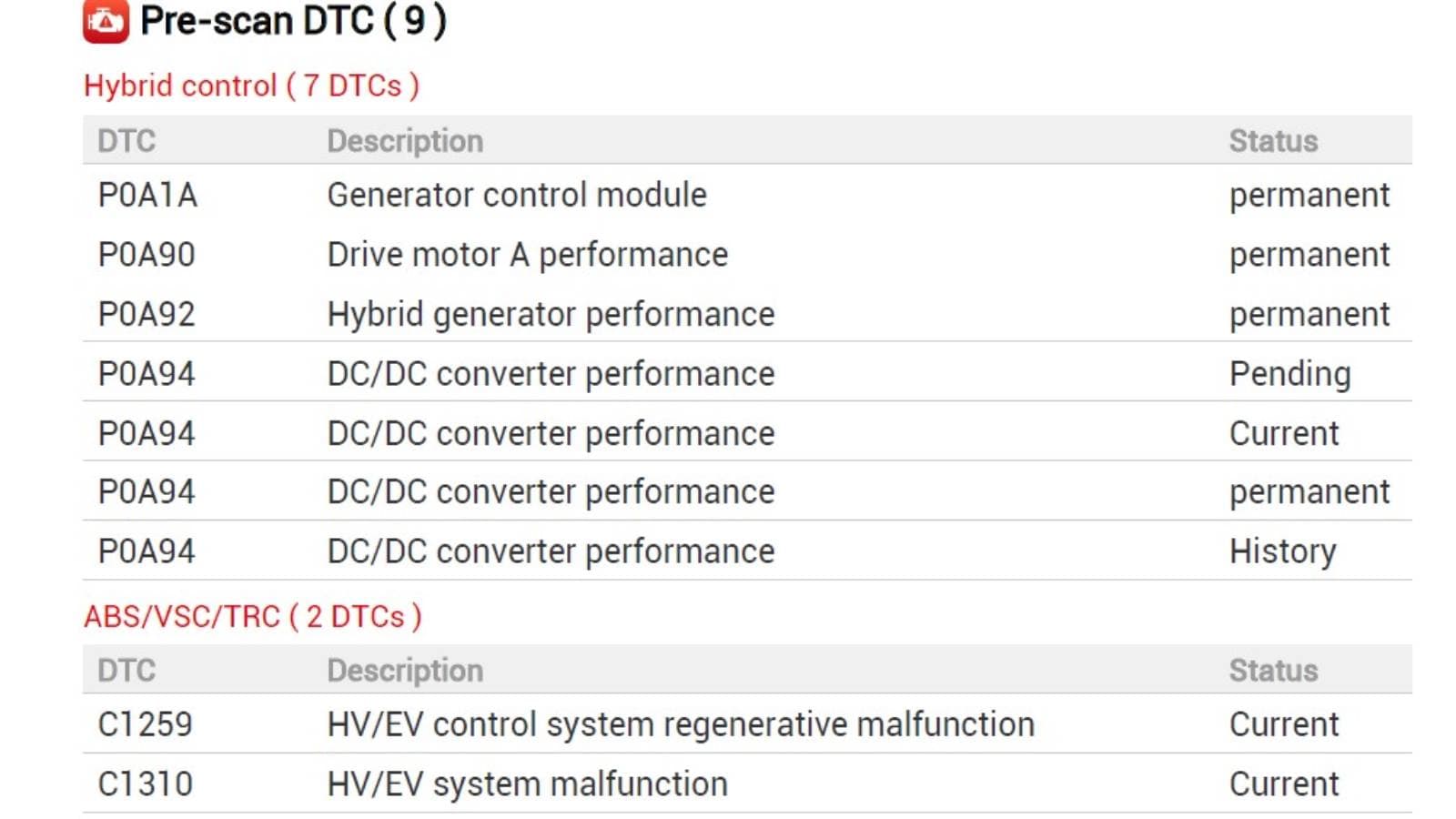
Hybrid control returned seven entries — codes for the generator control module, drive motor performance, hybrid generator performance, and four entries for P0A94 — DC/DC converter performance across pending, current, permanent, and history states. ABS/VSC/TRC returned two more codes related to regenerative braking and the HV/EV system.
We followed Toyota's factory diagnostic procedure for this combination of codes. The procedure starts with P0A90, runs through a sequence of verification steps, and then presents a documented fork — if certain other codes are present, it redirects to a different priority. P0A94 was on that list, so the procedure routed us to address it first.
The P0A94 procedure asks for the INF (information) sub-codes, which narrow the failure mode beneath the main DTC. This car returned INF codes 550 and 564 — both pointing to the same component: the inverter with converter assembly.
Before condemning the inverter, the manual prescribes a connector verification step. With the high-voltage service plug grip removed, we disconnected and inspected the low-voltage connectors that carry signal between the inverter and the rest of the vehicle's control network — checking contact pressure, locking-claw engagement, and pin condition.
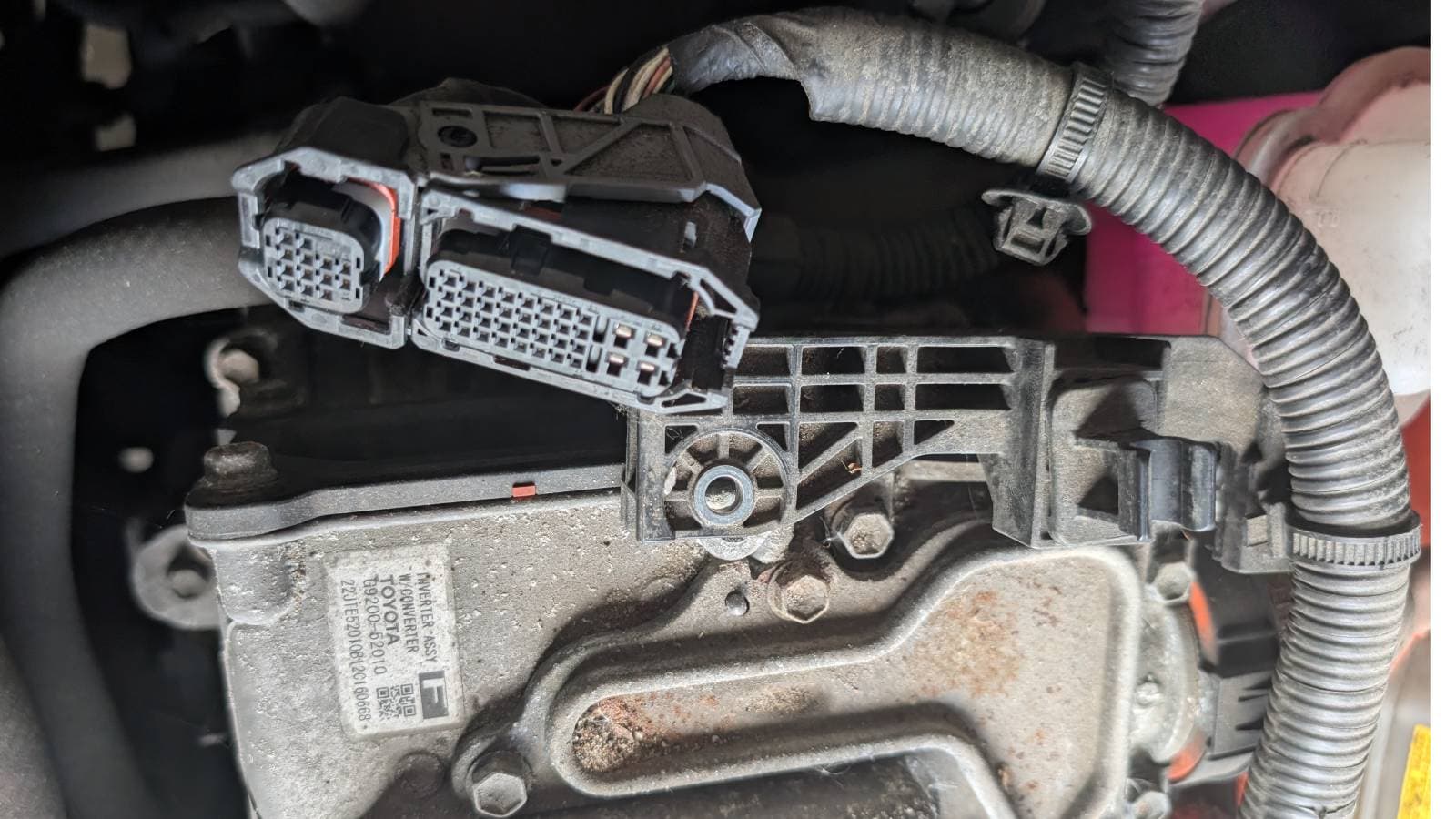
The connectors checked out. With the wiring side ruled out, the inverter itself was the only remaining failure point.
The diagnosis was the inverter assembly — not the transaxle, not the traction battery, and not the harness that feeds it.
Findings & Options
With the diagnostic confirming the inverter assembly as the failure point, we walked the customer through two repair paths.
New OEM — sourced from a Toyota dealer at around $2,000 for the part, plus labor. Full factory warranty and the lowest risk profile.
Used OEM — a low-mileage factory inverter pulled from a donor vehicle with verified miles. Same part number, same software compatibility, meaningful cost savings versus new. Carries the service life that comes with whatever miles are already on the unit, but with documented history.
Repair of the failed unit wasn't a viable third option. The components inside the inverter assembly aren't available as serviceable replacement parts, and the labor required to attempt a rebuild costs more than sourcing a known-good replacement. Inverters get replaced as a unit, not rebuilt.
On a 2012 Prius C approaching 200,000 miles, the economic math matters. A new OEM repair pushing toward $2,500 with installation is approaching territory where the cost of the repair starts to compete with the car's market value. Used OEM keeps a factory part in the vehicle at a fraction of that total. The customer chose the used OEM path.
The Repair
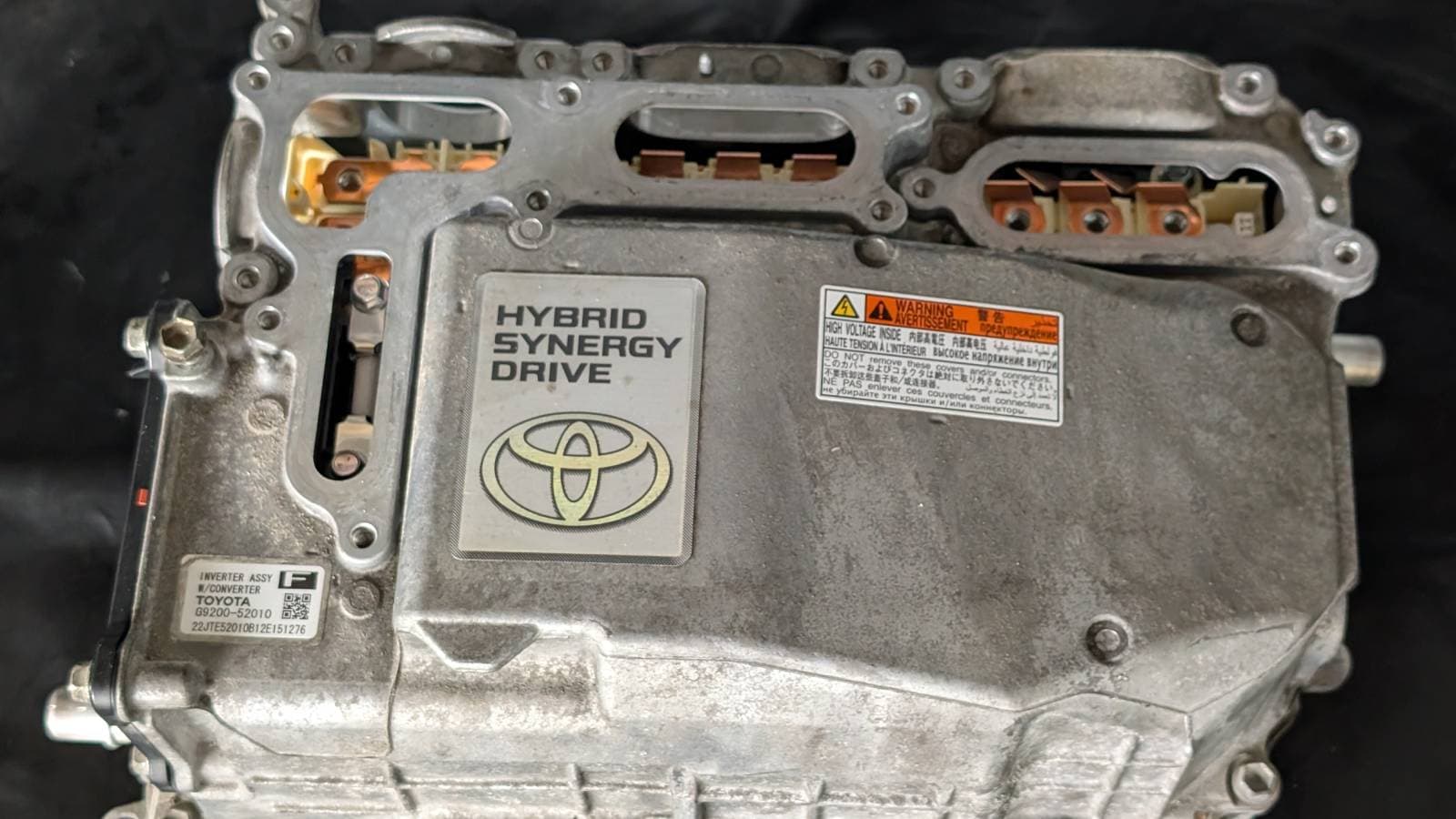
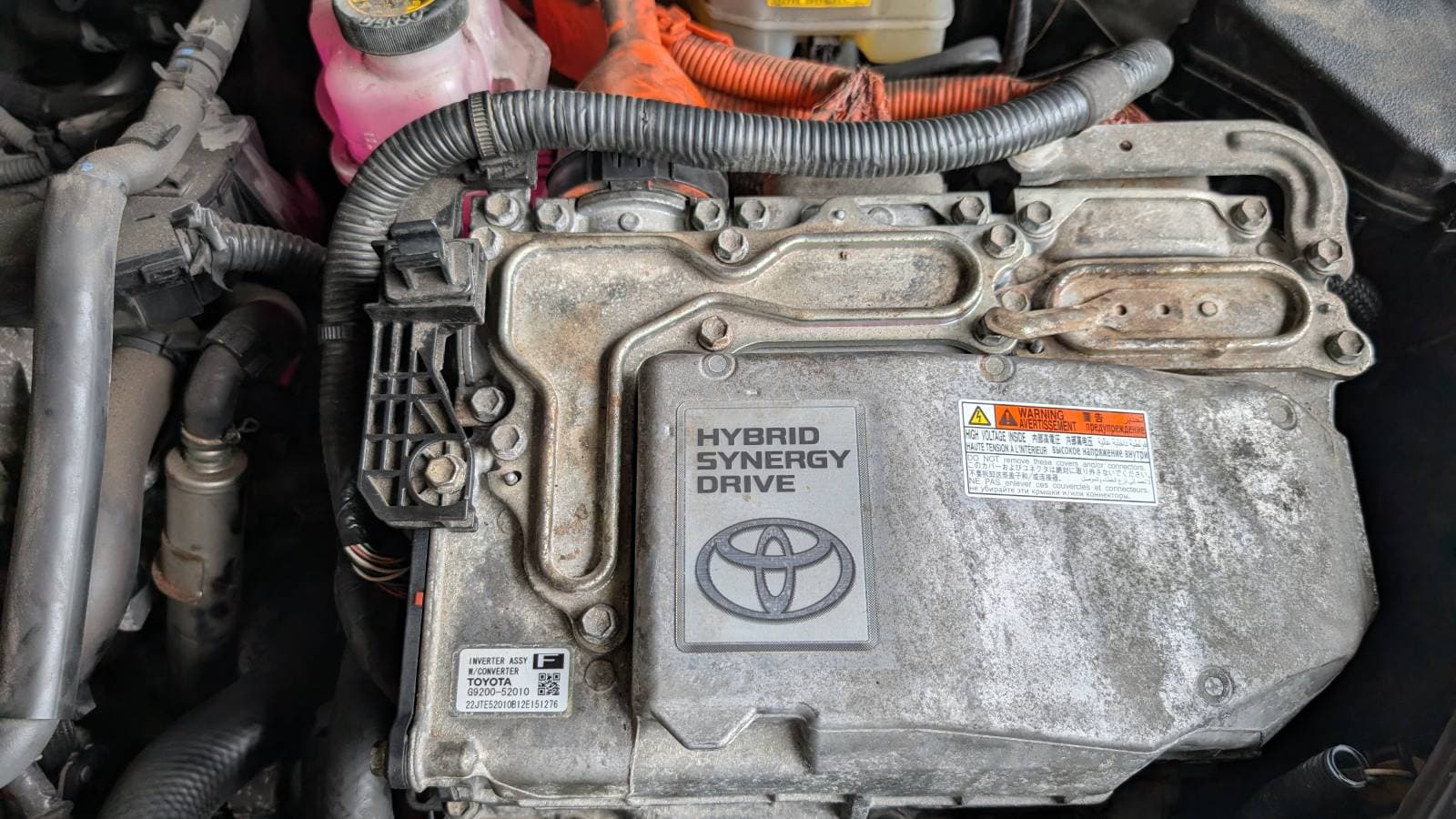
We sourced a low-mileage used OEM inverter assembly with matching Toyota part number G9200-52010 — exact software compatibility with the vehicle's existing ECUs.
High-voltage isolation. First, the 12V auxiliary battery was disconnected to remove power from the vehicle's low-voltage systems. Then the high-voltage service plug grip was removed from the traction battery pack to physically open the HV circuit.
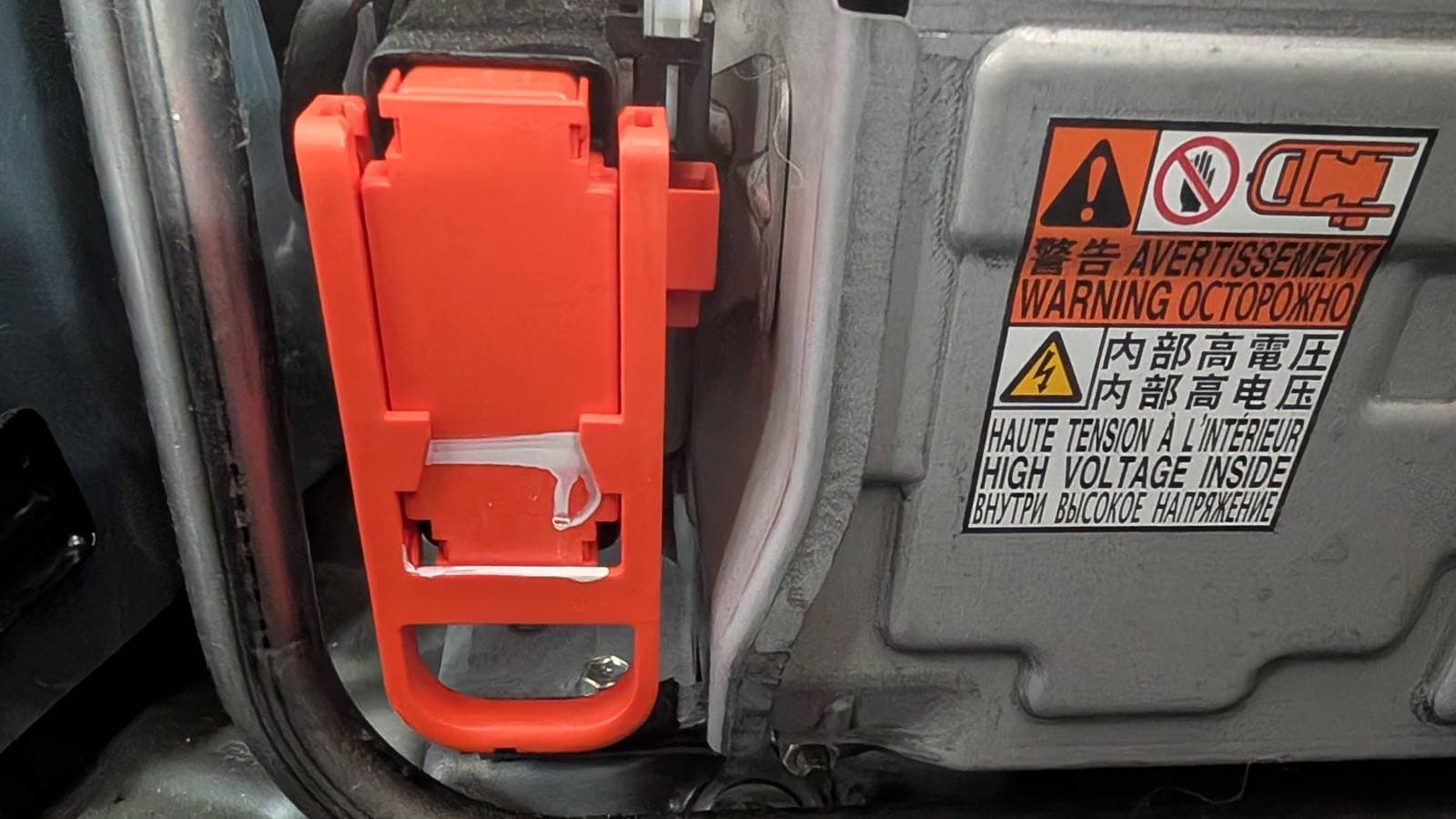
The vehicle sat for the prescribed wait period to allow the internal capacitors in the inverter assembly to discharge. Before any disassembly, we verified zero voltage at the inverter terminals with a multimeter. Insulated gloves throughout.
Disconnection and extraction. With the inverter electrically dead, the inverter cooling loop was drained — the dedicated electronics cooling circuit that runs separately from the engine cooling system. Coolant lines disconnected and capped. The low-voltage communication connectors came off next (those were already inspected during the diagnostic step). Then the three-phase high-voltage power terminals — the orange cables that carry current to and from the motor-generators. These don't use standard pin connectors. They bolt directly to solid busbars inside the inverter housing because the current load would melt anything less.
With fluid, data, and power lines all cleared, the structural mounts came off and the failed inverter lifted out.
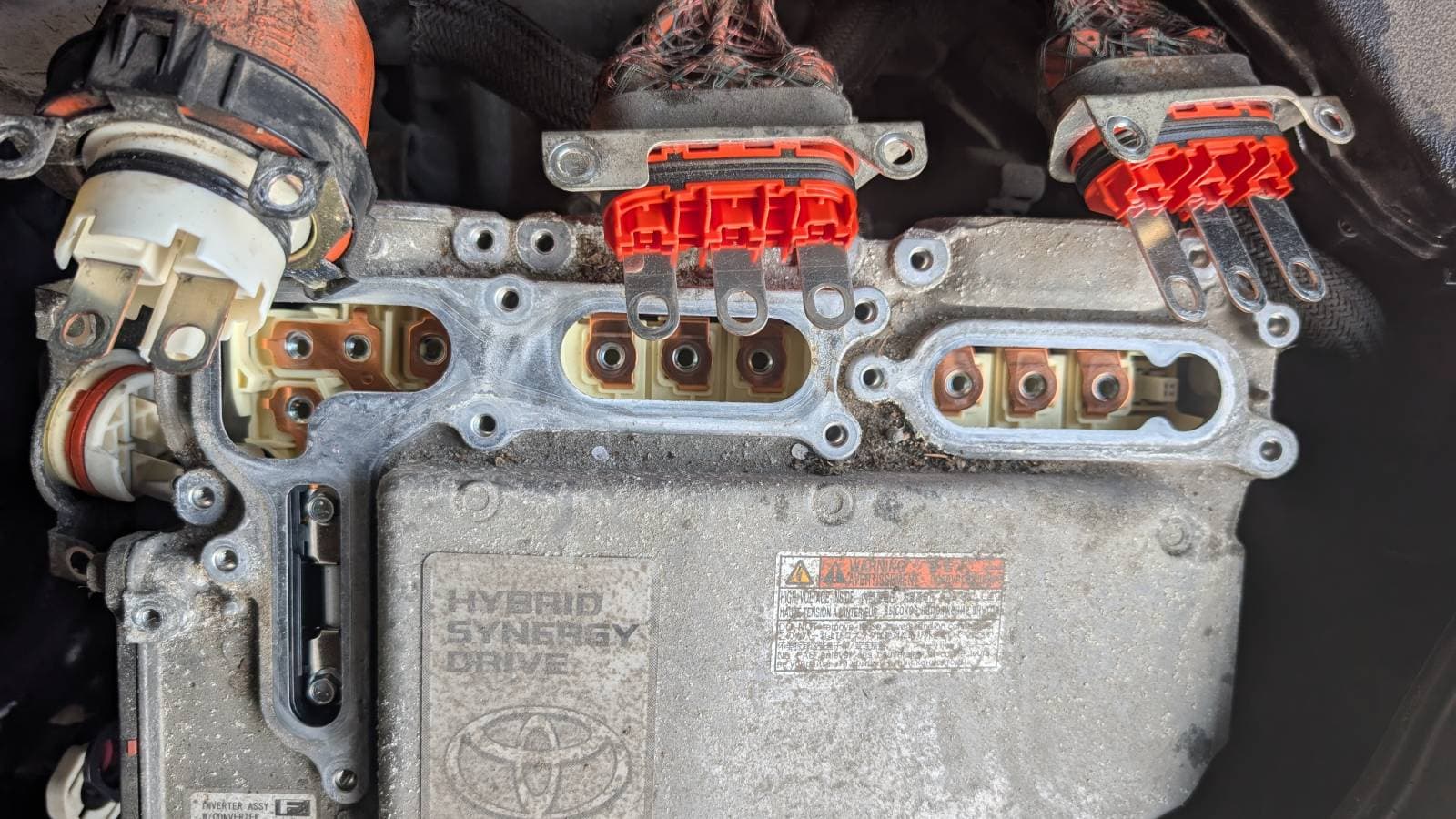
Bench inspection. The replacement unit was bench-inspected before installation. Part number matched. Sealing surfaces clean. No shipping damage.
Integration. Installation in reverse: mounted to spec, three-phase power terminals torqued onto the busbars, communication connectors clipped in, cooling lines reconnected. The cooling loop was vacuum-filled with fresh Toyota Super Long Life Coolant. HV service plug re-engaged.
Verification & Handoff
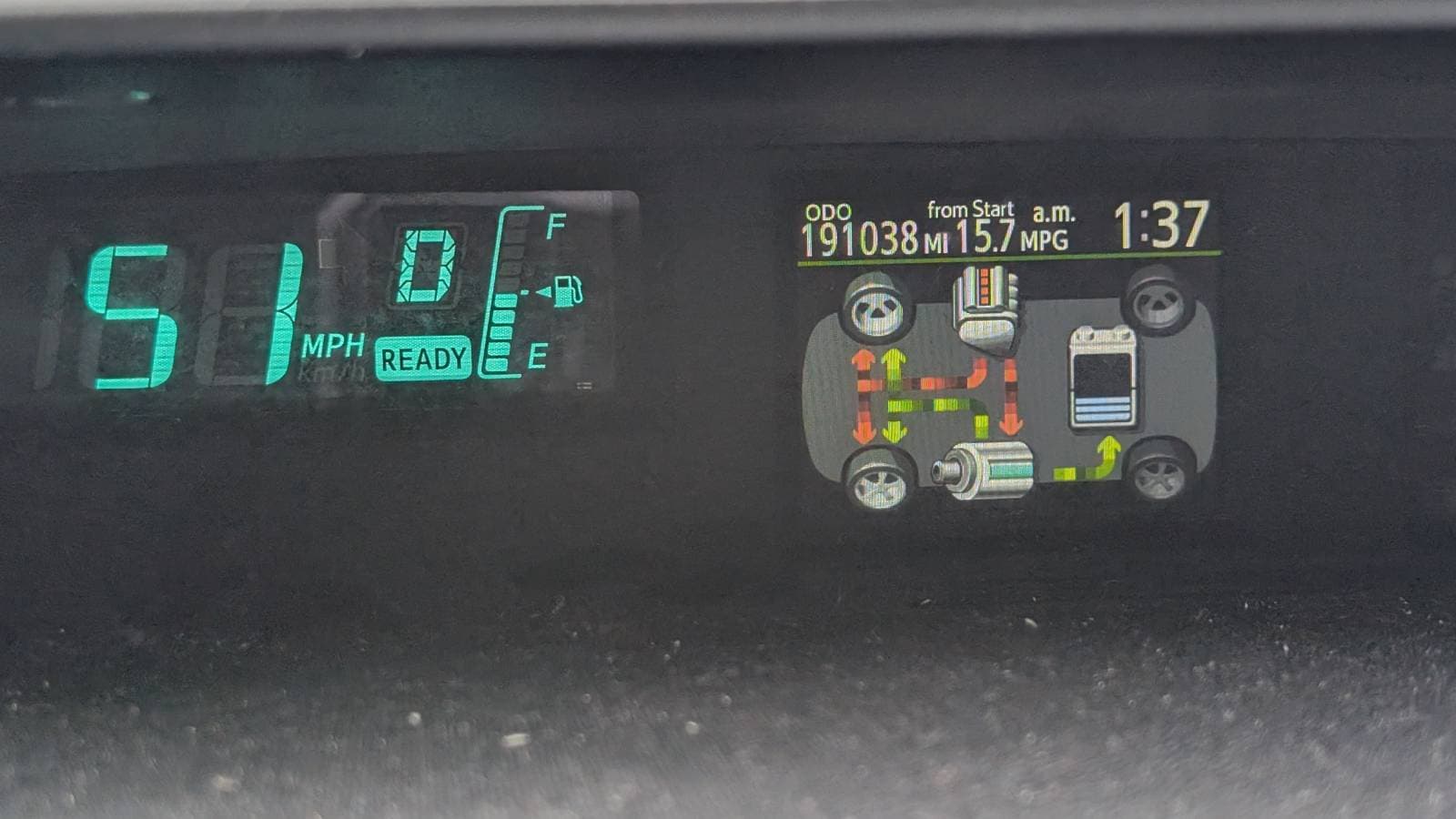
First key-on after the repair: the car cycled through its safety bulb checks and went directly to READY state. No CHECK HYBRID warning. No cascade of dash lights. The energy flow display showed normal operation — engine routing power, traction battery charging, regen braking active.
We road-tested under sustained driving conditions: EV mode transitions, regenerative braking, highway loads. No warnings, no hesitation, no thermal flags from the new inverter.
The immediate post-repair scan cleared the current and pending codes, but the four permanent codes — P0A1A, P0A90, P0A92, and P0A94 — remained on the scan. That's expected behavior. Permanent DTCs are not user-clearable by design. They stay in the ECU until the vehicle completes the required drive cycles with the relevant monitors passing, at which point the ECU clears them itself. It's the standard federal OBD-II behavior for serious faults, and it's how the system confirms a repair has actually held up over real-world driving — not just at the moment the keys go back to the owner.
After the prescribed drive cycles, a follow-up scan returned the system fully clean. All nine pre-repair codes gone. The 12V system held steady at 14V. Inverter thermal temperatures within factory spec.
Pattern Notes
Inverter failures on the Gen 1 Prius C (2012–2019) are a recognized high-mileage pattern. The DC/DC converter circuit inside the inverter assembly is one of the more common failure modes on this platform. P0A94 is the diagnostic fingerprint.
The symptom signature tends to be consistent. The car enters READY and then drops out. The CHECK HYBRID warning appears. The transmission shifts itself to neutral. Sometimes the car will start and move briefly before the system shuts itself down for safety. In other cases the car won't enter READY at all. The 12V battery often shows below normal voltage, which can lead to a misdiagnosis as a simple battery problem — but the underlying cause is the DC/DC circuit's inability to maintain the 12V charge.
Code-state pattern matters: when P0A94 is logged across pending, current, permanent, and history simultaneously, the failure is established, not transient. Connector-level checks should still be run per Toyota procedure to rule out wiring before condemning the assembly.
Repair cost on these is high relative to vehicle value at high mileage. New OEM inverter assemblies for this platform run in the high-three-figures to low-four-figures range for the part alone. On a Prius C approaching or past 200,000 miles, used OEM is often the path that keeps the repair economically rational. Aftermarket inverters for this platform aren't really a category; this isn't a part where third-party manufacturing has caught up to dealer pricing.